
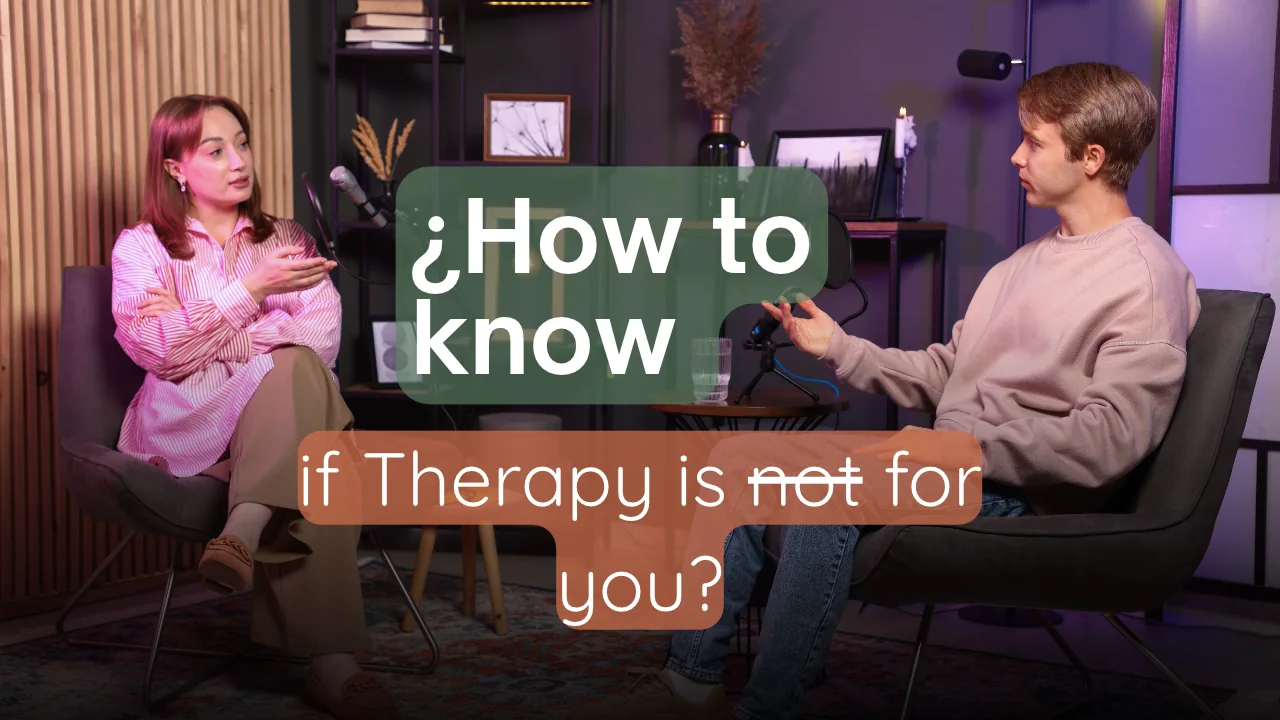
“I’m not bad enough to see a psychologist.”
If you work in psychology, you hear that sentence a lot. And it’s almost always said by someone who has been carrying something heavy for months, sometimes years.
How long do you think passes between the moment an emotional problem starts and the day that person finally looks for help?
Philip Wang and colleagues reviewed World Health Organization surveys in 15 countries. Among the people who did end up seeking treatment, half waited at least 1 to 14 years for mood problems, and 3 to 30 years for anxiety problems, depending on the country.
Years.
Behind that wait there’s usually a very widespread idea: that therapy is for when you can’t take any more, as if you had to earn the right to ask for help by suffering enough. Sadly, that math doesn’t add up. Nobody waits for a huge cavity before going to the dentist.
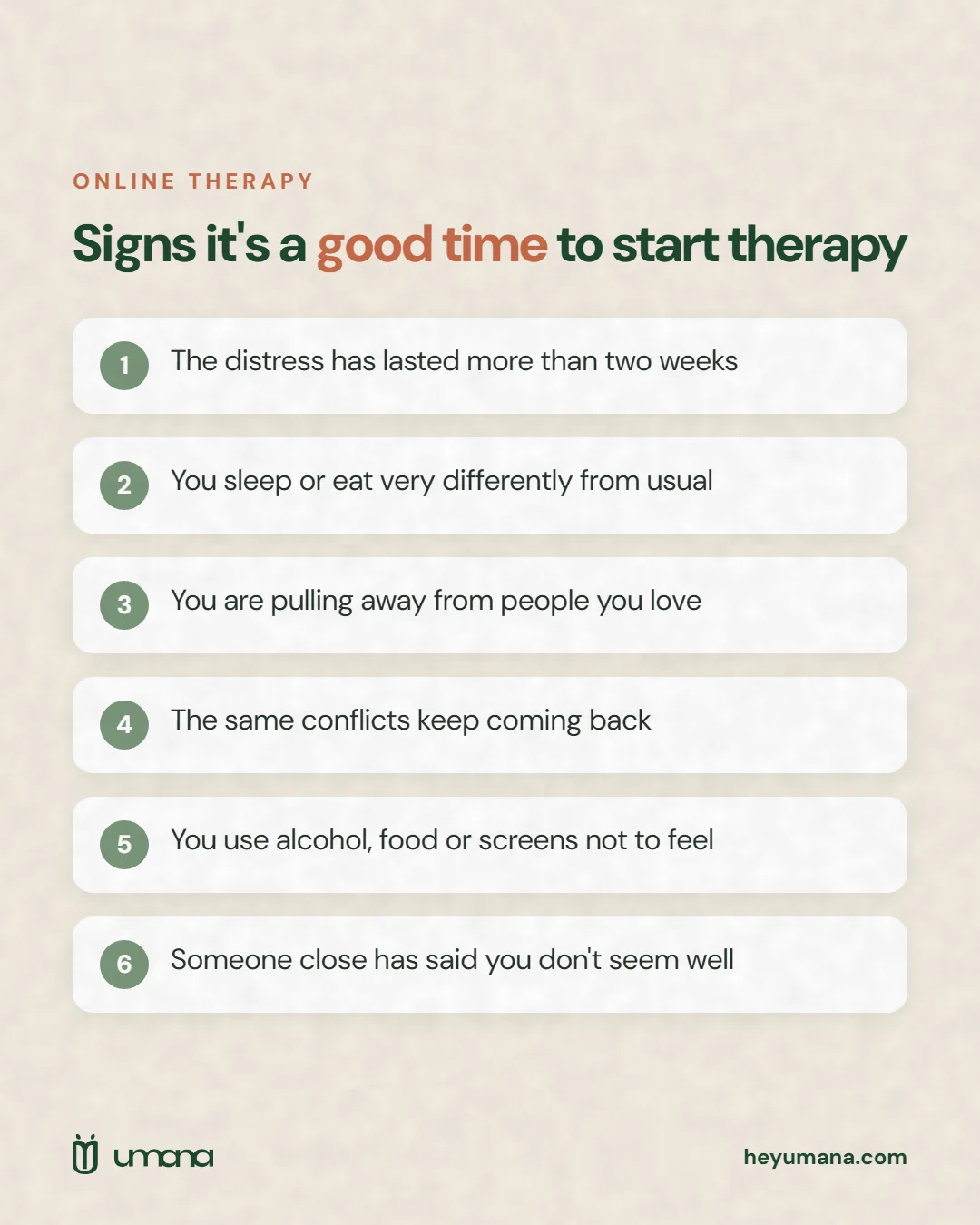
Here are nine signs that it might be a good moment.
What you notice in your body and your routine
1. The distress doesn’t go away. We all have bad days; the difference is how long they last. If you’ve felt sad, anxious, empty or irritable almost every day for more than two weeks, that deserves attention. And the number has a reason: two weeks is exactly the time diagnostic manuals like the DSM-5 use before talking about a depressive episode.
2. Your sleep or appetite has changed. You sleep much more or much less than before. You wake up in the small hours with your mind switched on. You’ve lost your appetite, or you eat without being able to stop. The body often warns you before the mind does.
3. You struggle to function. You find it hard to concentrate, you get less done, tasks you used to handle without thinking pile up. Many people call it laziness, and it’s often emotional exhaustion. If you suspect that’s your case, the article on what stress does to your body may help you name it.
What happens with the people around you
4. You’re isolating yourself. You cancel plans, leave messages unanswered, prefer to stay home when you used to enjoy going out. At first it looks like rest. But when it becomes a habit, it’s often a way of escaping something.
Here’s a mechanism worth knowing: negative reinforcement. When avoiding a situation takes away discomfort, even for a while, you learn to avoid it again. And the more you avoid it, the harder it is to go back.
5. The same problems keep coming back. The partners change and the conflict stays the same. The job changes and the feeling of being walked over comes back. When a story repeats itself with different characters, therapy helps you see which part of that pattern depends on you and what you can do differently.
6. Someone close has told you. “You seem different.” “Are you OK? You haven’t been yourself lately.” The people who love you sometimes see what you don’t yet want to look at. You don’t have to agree with them right then, but it’s worth listening.
What you do to cope and what you are living through
7. You use something so you don’t have to feel. The nightly drink “to relax”. Hours on social media until your eyes sting. Purchases you didn’t plan, eating at odd hours.
Sound familiar? It’s the same negative reinforcement from sign 4: if something switches off the discomfort for a while, you’ll repeat it. None of those things is bad in itself, but if you need it to get through the day, there’s probably something underneath asking for attention.
8. You’ve been through something hard. A break-up, the death of someone you loved, losing your job, moving to another country, a diagnosis, the birth of a child. Even good changes throw things out of order. Having somewhere to process them can make the difference between getting through them and getting stuck.
9. You simply want to understand yourself better. This is the sign people forget most. You don’t need to be unwell to go to therapy. Many people go to get to know themselves, to make a big decision, to get on better with their family or to learn to manage stress.
When you shouldn’t wait. If you’re having thoughts of hurting yourself or that it would be better not to be here, if you feel you can’t keep yourself safe, or if someone close to you is going through that, don’t wait for an appointment. In Ecuador call 911, or see the crisis helplines. They answer at any time.
“What if I go and don’t know what to say?”
It happens a lot, and there’s nothing wrong with it. Nobody expects you to arrive with a prepared speech or a diagnosis under your arm. You can start exactly like this: “I’m not really sure where to begin.” Finding the words is part of the job of the person listening to you.
And now let me ask you: how many of these nine signs did you recognize in yourself? And how long have you been waiting to be “bad enough”?
At Umana everything starts with a short, confidential questionnaire that helps us connect you with the right person. From there you go at your own pace, by phone or video call.
Sources: Wang and colleagues, 2007, World Psychiatry. American Psychiatric Association, DSM-5, 2013.



This article provides general information and is not medical or therapeutic advice. Mentions of diagnoses or therapy and treatment options are educational and do not mean they are available through Umana in your country.
Leave a Reply