

Coming back from holiday and feeling the wellbeing and relaxation vanish within a few days can be frustrating. After all that rest, when it is time to get back to your routine, you will very probably ask yourself:
How can I already be tired again?
Research on recovery from work tells us the problem is not necessarily that you “rested badly” or didn’t make the most of your holiday. A big part of what happens is that the benefits of a holiday tend to fade after you go back to work (like almost everything in life).
This doesn’t mean holidays are useless; they do restore wellbeing, just temporarily. The point is that on their own they don’t seem to be enough to keep that effect going for as long as we would like. So besides thinking about how to rest on holiday, it can help to ask how we are recovering during ordinary weeks and how we manage the transition back to work.
Holidays help, so why don’t the effects last?

A 2009 meta-analysis by de Bloom and colleagues pooled research on the effects of holidays on health and wellbeing. The results showed that holidays produce a small but significant improvement in these measures (d = 0.43). However, they also found that this improvement tended to disappear shortly after returning to work, with a fade-out effect of similar size (d = −0.38).
Speth, Wendsche and Wegge (2023) reached a similar conclusion in a meta-analysis of 13 studies and 1,428 participants. They found an improvement in wellbeing during the holiday (d = 0.25), but after the first week back there was no longer a statistically significant difference from pre-holiday levels.
An interesting result is that the length of the holiday did not significantly change this pattern. The studies looked at holidays of 4 to 23 days, and longer holidays were not found to produce a necessarily longer-lasting effect.
This doesn’t mean holiday length doesn’t matter, or that taking more days off has no benefits. It means that, within the range studied, more days off did not guarantee that wellbeing lasted longer after returning.
Wellbeing also changes before you go on holiday.

The effect of a holiday doesn’t necessarily begin on the day we stop working.
Syrek, Weigelt, Kühnel and de Bloom (2018) followed 145 workers for 15 weeks and took more than 2,000 measurements of their emotional wellbeing. They found that wellbeing started to improve before the holiday and that, after returning, it gradually drifted back to its usual level.
The study also found differences between people. For example, those with fewer pending tasks in the run-up to the holiday showed a better course of wellbeing, and certain recovery experiences during the holiday and on the following weekends were linked to a slower fading of the benefits.
This lets us see holidays as part of a broader recovery process rather than as an isolated event.
Recovery doesn’t depend only on what you do

When we think about resting, we usually ask which activity we should do: travel, sleep, read, exercise or spend time with family and friends. However, research on recovery from work tells us to consider whether that activity actually does something for us.
In a study of 930 people, Sonnentag and Fritz (2007) identified four experiences especially linked to recovery:
- Psychological detachment
This means stopping thinking about work in your free time. Being physically away from the office isn’t enough; it also matters to be able to stop going over work problems, tasks and responsibilities.
- Relaxation
This means lowering physical and mental activation, because not everything we do in our free time relaxes us. Some activities can be enjoyable but also demanding or stimulating.
- Mastery
This means doing activities that let us learn, build skills or take on a challenge different from work. It could be learning a language, cooking something new, playing a sport or developing a hobby.
- Control
This is being able to decide how we use our free time. Having the ability to choose what to do, when and with whom can support recovery.
So there is no universal activity that works as the best way to rest. A walk may help you switch off one day and not the next; reading can relax you or become one more thing you do out of obligation.
That’s why it helps to change the question from “what should I do to rest?” to “what do I need to experience to recover?”
Detaching from work matters

Karabinski and colleagues (2021) analysed different strategies aimed at improving psychological detachment from work and found that it can be strengthened. This matters because switching off from work doesn’t depend only on personality; we can also learn strategies that help us set work worries aside during our time off. It doesn’t mean never thinking about work, but being able to set limits and choose when to deal with those worries so they don’t take over all our free time.
If we keep thinking about work constantly in the evenings and at weekends, our free time may not be fully doing its job of helping us recover.
Recovery can also happen during the working day

Holidays are not the only chance to recover.
Albulescu and colleagues (2022) carried out a systematic review and meta-analysis of so-called micro-breaks (short breaks, usually under ten minutes) during the working day. They analysed 22 samples with a total of 2,335 participants and
found that these breaks were associated with more vigour (d = 0.36) and less fatigue (d = 0.35). The effects on performance were more limited and not statistically significant overall.
So micro-breaks shouldn’t be presented as a solution to every work problem. But they do offer a brief chance to recover within the working day itself.
A break can simply mean getting up from your desk, walking for a few minutes, breathing calmly, having a drink or doing something that lets you briefly change focus. What matters is that it is really a break and not just more time spent working.
Going back to work also needs a transition.

Research on holidays shows that wellbeing tends to drop after returning, but that doesn’t mean there is a single cause.
One possible explanation, from research on learning and context, is that our behaviour and responses are influenced by the cues around us. Bouton (2004) studied this in the context of extinction and described the so-called renewal effect: a response that has faded in one context can reappear when the person or animal returns to a context previously associated with it.
This idea can help us think about going back to work, but it is important not to confuse a theoretical explanation with direct proof. Bouton’s study did not look at workers returning from holiday, nor did it show that work exhaustion “renews” in exactly this way.
What we can say is that returning to the same workplace also means returning to the demands, responsibilities and cues that were there before the holiday. So if we want the return to be more sustainable, it makes sense to pay attention not only to the rest we left behind, but also to the conditions we are returning to.
Habits also need time to come back
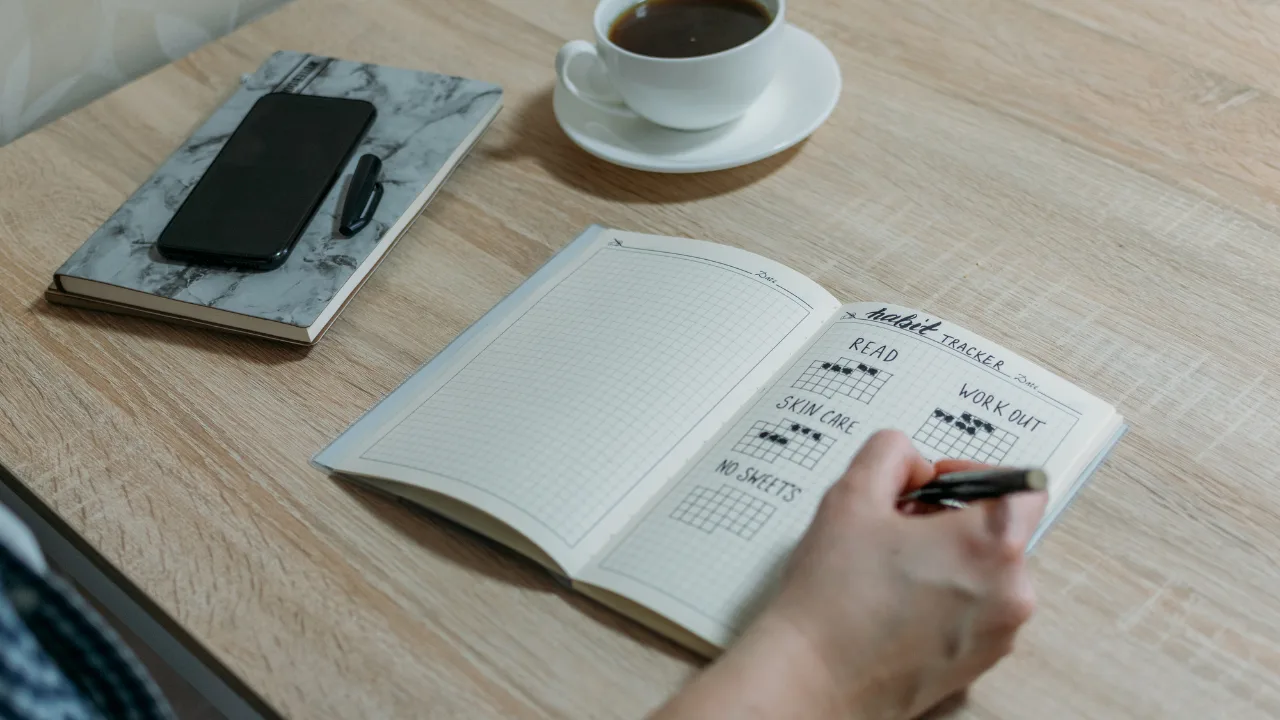
After a holiday, many people try to get all their habits back at once: getting up early, exercising, eating better, going to bed at a set time and organising work. When that doesn’t happen in the first few days, it can feel as if the routine has been lost.
Research by Lally, van Jaarsveld, Potts and Wardle (2010) helps explain why. In a study of people trying to build new behaviours into their daily lives, they found that habits became automatic through repeating a behaviour in a stable context. The time needed varied widely between people and behaviours. The observed range was 18 to 254 days, with a median of about 66 days.
So the famous “21 days to form a habit” is not an absolute rule.
They also found that missing one opportunity to do the behaviour did not ruin the habit-forming process.
This means that if you don’t exercise on the first Monday after your holiday, eat dinner late or can’t stick to your usual routine, you haven’t gone back to square one. Habits are rebuilt through repetition.
What can you do to make the return more sustainable?

The evidence available doesn’t give us a single formula for coming back from holiday without fatigue. But it does offer some ideas.
- Don’t expect a holiday to keep you well for months: Holidays are important and necessary, but their effects tend to fade after you return. So try to build moments of recovery into the whole year, so that recovery doesn’t depend only on a few weeks a year.
- Protect your time to switch off: If you can, set boundaries between work and personal life. You can start with simple steps such as not checking work email at certain times, muting notifications outside working hours or setting a specific time to go through pending messages. The aim is not to ignore all your responsibilities, but to allow a period when your attention isn’t constantly pulled towards work.
- Make the return gradual when you have room to: There isn’t enough evidence to say that going back on a Wednesday is necessarily better than going back on a Monday. But if you have flexibility, it can be sensible not to pile every work demand onto the first day.
You can set aside time to get organised, review what’s pending and get back into your rhythm before taking on especially demanding tasks. - Check what is waiting for you when you return: The study by Syrek and colleagues (2018) found that pending tasks were linked to how wellbeing changed around the holiday.
So before you leave, it can help to be clear about what is still pending, what can wait and what will need sorting out when you get back.
You won’t always be able to reduce the workload, but you can try to reduce the uncertainty about what awaits you. - Rebuild your habits little by little: Instead of trying to get your whole routine back in one day, pick one or two important behaviours.
For example:
Going back to bed at a reasonable time;
Walking for 15 minutes after work;
Making a simple meal at home;
Gradually getting back to exercise.
Try to attach them to after breakfast or arriving home; this can make them easier to repeat. And if you miss a day, carry on the next. - Take small breaks during work: Micro-breaks can help reduce fatigue and increase vigour. They don’t have to be complicated. A few minutes away from the screen, walking, stretching or simply switching activities can create a small space for recovery during the day.
The goal is not to avoid tiredness

Feeling a bit tired when you come back from holiday can be perfectly normal.
Holidays can improve our wellbeing and, at the same time, their effects can fade once we take up our usual demands again. Both things can be true.
Research on holidays, recovery, micro-breaks and habit formation suggests that wellbeing doesn’t depend only on long periods of rest, but also on what happens on ordinary days.
A holiday can give you a much-needed rest. But the recovery you need to keep going through the year is also built on working days, in the evenings, at weekends and in the way you set boundaries.
Getting back to your routine doesn’t have to mean going straight back to the same level of demand.
It can be a chance to notice which conditions help you recover and which ones leave you exhausted again. And, where possible, to make small changes to them.




This article provides general information and is not medical or therapeutic advice. Mentions of diagnoses or therapy and treatment options are educational and do not mean they are available through Umana in your country.
Leave a Reply